
As a real estate broker, you rely on your professional license to earn a livelihood. However, the California Department of Real Estate (DRE) may instigate a probe that could result in you losing that license, and along with it, a career you have worked so hard to build. That is why if there is a complaint about you for any violation, you do not want to leave anything to chance. Contact an experienced license defense attorney to help you.
Alone, you could be subject to a rushed judgment or the department’s overreach. Retaining a lawyer safeguards your legal rights and increases your odds of keeping your license and maintaining your reputation.
At San Luis Obispo License Attorney, we defend a broad range of professionals, including real estate brokers, whose ability to do their job or integrity is challenged. We can do the same for you as well. Contact us as soon as possible to schedule a complimentary consultation.
Real Estate Broker License Oversight
In California, the DRE issues practicing licenses to and regulates qualified realtors and brokers. That said, the board can equally deny licenses to unqualified applicants. This department also has the broad discretion to probe complaints and impose disciplinary actions against licensees.
Note that DRE does not have your best interest at heart as a professional. Their job is to safeguard consumers and the public against unethical and unprofessional practices. So, it is on the consumer’s side. Consequently, the department may want to take disciplinary action against you if it finds that you are at fault.
Never face the DRE alone. Doing so may lead the department to pressure you into agreeing to a harsh decision. Alternatively, you may not be able to tell your account of events effectively. A lawyer can guide you on how to tell your story to convince the officials that you did not violate any law or that the violation was accidental.
What Does a Real Estate Broker Do?
A real estate broker provides the public with invaluable services, often required by California residents. They invest in land in California. They help other people to legally transfer real estate and negotiate the conditions of leases or sales. They also serve as middlemen between property sellers and purchasers, ensuring that they have complied with contractual terms and conditions. At times, they even finance the transaction.
In some instances, brokers assume the roles of sales team managers, whose members operate under the endorsement of the real estate broker’s license.
Note that realtors and brokers have different roles. Although they both assist clients in buying or selling property, realtors typically work under the supervision of brokers. On the other hand, real estate brokers have an advanced license. They can work independently and supervise other agents. In essence, they are one step above real estate agents in authority and education. Realtors are entry-level professionals who handle daily transactions, whereas brokers are qualified to run their own firm.
As a broker in real estate, you must understand the state’s real estate statutes. You must also be up-to-date with the local, state, and national economies, as well as be meticulous in reviewing and assessing the works of loan officers, property appraisers, and other professionals who participate in the property transaction process.
Needless to say, the nature of your duties makes you susceptible to various potential criminal charges, lawsuits, and official complaints brought against you by the DRE. You want to be cautious to avoid committing any mistake that could result in the loss of your license.
Common Allegations That Can Trigger DRE Discipline
As a broker in real estate, you can lose your license for virtually any mistake, be it on the job or off the job. Prevalent actions that subject you to disciplinary action include the following:
- Fraud or misrepresentation. Giving false info about a client, property, or transaction
- Mishandling trust accounts. Improper withdrawals, bookkeeping errors, failure to keep clients’ funds separate
- Not disclosing a criminal conviction. Being found guilty of an offense related to the functions, duties, and qualifications of a real estate broker or failing to report a conviction as the department requires.
- Unlicensed activity. Working outside your professional license scope or permitting unlicensed assistants or other staff to do licensed duties
- Illegal payment of commissions
- Compliance mistakes exposed by a broker office survey
- Broker trust fund conversion and shortages
- Commingling of broker trust funds
- Disqualification from MLO licensing because of civil lawsuits, criminal convictions, poor credit, bankruptcy, or other background problems
- Other violations. Several violations of fiduciary duty, unethical behavior in transactions, or specific MLS violations
How The DRE Handles a Complaint
The DRE receives complaints against license holders and applicants on a routine basis. The complaints could be from anywhere, including colleagues, clients, employers, the public, and other boards. When the department receives a complaint against you, it will first review it to determine whether it has jurisdiction to act on it. If there is jurisdiction, the department will forward the complaint to its investigative division for investigation. A probe could also be initiated when the department learns of a criminal conviction or allegation against you.
After a review, the department typically dismisses most complaints because they have no merit or, if they do have merit, there is insufficient evidence to proceed. However, in certain instances, a more thorough and possibly prolonged investigation will start.
At this point, the department investigators will act in either of two ways. They will conduct a sting operation, whereby they believe calling you regarding the complaint will compromise their capability to gather enough evidence. Alternatively, they will send a Notice of Investigation (NOI) to you via mail.
An NOI informs you that you are facing an official inquiry, details the alleged misconduct, possible violation, or the matters being investigated, and outlines the steps that will follow. This includes a request for an interview or information to ensure transparency and due process. It officially notifies you, requests evidence, and outlines your obligations and rights during the probe.
The DRE may also send you a notice of a citation or an audit of your business practices. In every case, you want to consult a lawyer soon after you learn your license is under investigation.
Should the department investigator contact you for information or an interview, do not talk to them until you first speak with an experienced license defense counsel. At the same time, ensure you cooperate with the investigators, as failure to cooperate can lead to more severe consequences along the way. However, giving the department information before you speak to an attorney can result in self-incrimination and restrict your defense strategies.
During the investigations, the DRE may issue an interim suspension order (ISO) against your license. An ISO is an emergency but temporary measure that bars you from continuing to practice your profession while investigations are ongoing, mainly to maintain order or safeguard the public. A lawyer can help you fight an ISO. As you may know, the DRE’s investigations can take an extended period, and you cannot risk being out of work until they are over.
After the investigations, the department can take various actions based on the outcome. If the investigations find that there is still no adequate evidence to proceed, the department may decide to drop the complaint and close the case. If there is evidence, but it is only a minor violation, the department may impose a fine, citation, or letter of reprimand. And should the department feel it has a solid case against you, it can send your case to the Office of the Attorney General for further action.
Accusation Filing
When your case goes to the office of the Attorney General, the Deputy Attorney General can file an official accusation against you if you are a license holder or a statement of issues if you are an applicant. These are legal documents outlining your alleged misconduct or problems that could result in formal discipline. The Attorney General’s Office will then mail you a notice of Statement of Issues or Accusation (whichever applies) to notify you that your license faces possible disciplinary action due to the allegations against you.
If you intend to defend your license, you must file a Notice of Defense within fifteen days of the day the Notice of Statement of Issues or Accusation was mailed to you, not from the day you received it. Failure to file a Notice of Defense within 15 days, the department might assume that you are accepting the allegations against you to be true. This could, in turn, lead to revocation or denial of your professional license by default.
Your lawyer can assist you in filing a Notice of Defense and fighting the accusations against you. They can negotiate a favorable settlement or fight for dismissal before you are subject to an administrative proceeding.
Administrative Hearing
Otherwise, once you file your Notice of Defense, the deputy attorney will schedule an administrative proceeding. This hearing will be presided over by an administrative law judge. The judge will hear evidence from both sides and consider all the witnesses presented. Your lawyer can help you navigate this hearing. They can assist you in preparing thoroughly for it, presenting mitigating evidence, and working to expose weaknesses in the prosecution’s case.
At the end of the hearing, the judge will look into all the submitted evidence and write their recommendations to the department. They have 30 days to write their recommendations. If the judge finds that you are guilty, they will recommend the type of discipline the DRE should impose. The DRE then has the discretion to follow these disciplinary recommendations, modify them, or not consider them at all.
Disciplinary Actions You May Face
The disciplinary actions the DRE can impose range from a public reprimand to license revocation based on the nature and seriousness of the violation. Common ones include the following:
- Desist and refrain order. This is a lenient form of disciplinary action. It simply orders you to stop the supposed activity.
- Private or public reprimand letter. A letter of reprimand is an official warning for misconduct. It details the violation committed, expectations for improvement, and possible future consequences if the violation recurs. A private or public reprimand letter can damage your reputation and capability to attract clients in the future or be hired by potential employers.
- An administrative fine. The fine could be either substantial or minor, contingent on the severity and nature of the crime.
- License revocation or suspension. License suspension prevents you from continuing to practice real estate brokerage for a particular period. A license revocation prevents you from practicing indefinitely.
- License probation. The department may decide to place your license on probation. Here, you will be allowed to practice, but with certain restrictions. License probation comes with strict probationary conditions. However, it is much better than losing your professional license altogether.
- Criminal or civil consequences. If the violation entails a criminal or civil offense, the district attorney may press charges on these grounds to supplement the disciplinary action by the Department of Real Estate.
If the ALJ cannot reasonably grant you a complete victory because of the case facts, your lawyer can still fight rigorously and obtain for you a more lenient form of disciplinary action. This allows you to retain your license, enabling you to continue practicing your profession.
Find a Skilled Professional License Defense Lawyer Near Me
If your real estate broker license is at risk, do not wait until the DRE determines your fate. You want to contact an experienced, licensed professional defense counsel immediately for help. Your lawyer can help prevent the investigation against you from advancing, possibly leading to disciplinary action. And if you must undergo the disciplinary process, the lawyer can help negotiate for the best possible outcome.
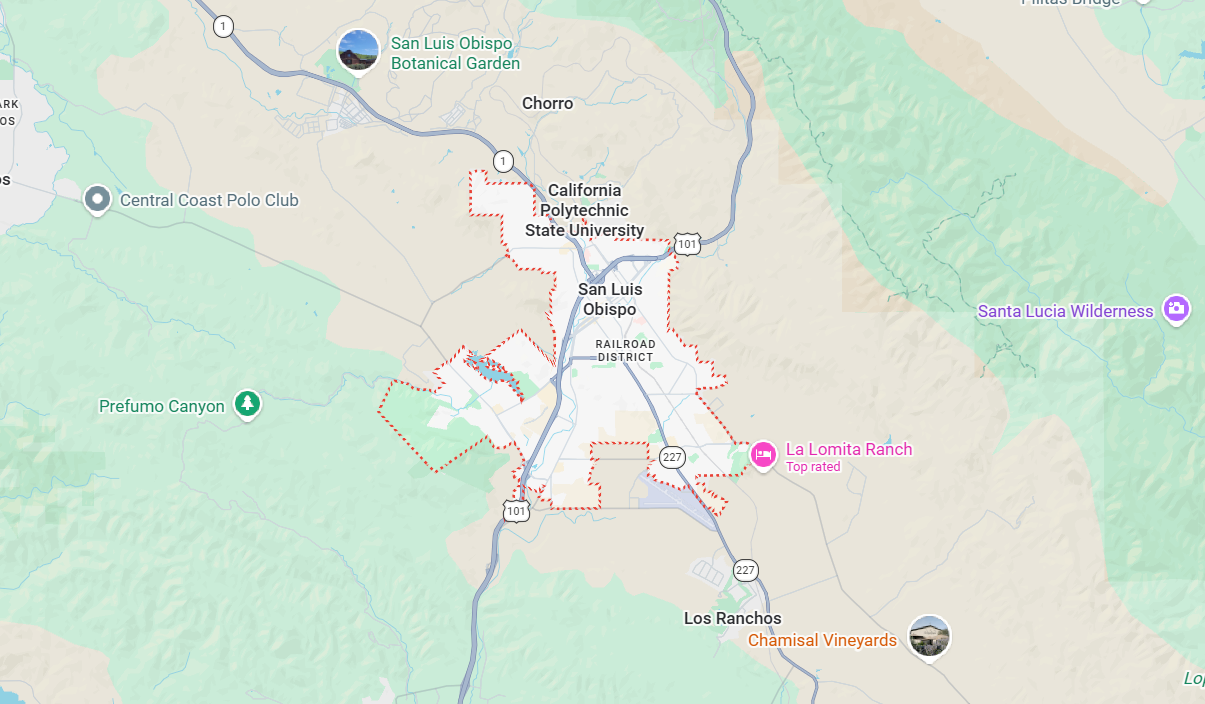
At San Luis Obispo License Attorney, our lawyers defend real estate brokers across San Luis Obispo and the surrounding areas, working to safeguard their licenses, reputations, and livelihoods. With several years of expertise in both real estate administrative law and transactions, we understand how the Department of Real Estate operates and what it takes to defend against their accusations. We will ensure that we fight to obtain the most favorable results for you. Contact us at 805-764-9771 to share your case details.